
Automated intersection monitoring sounds like one of those city tech phrases that feels far away from real life. Until you almost get clipped by someone running a red light. Or you sit through three cycles because one lane is blocked and nobody notices. Or an ambulance gets stuck behind a left turn that never clears.
That is the moment this stuff stops being “smart city hype” and starts being… practical. Necessary, honestly.
In simple terms, automated intersection monitoring uses a mix of cameras, radar, sensors, and AI video analytics to watch what is happening at an intersection in real time. Then it turns that into action. Safer signal timing. Faster incident detection. Better enforcement where it is legal. Cleaner data for engineers so they stop guessing.
And yes, it is a breakthrough. Not because it is flashy, but because intersections are where the worst things happen.
Automated Intersection Monitoring for Traffic Safety: Why Intersections Are the Real Problem
If you look at most serious urban crashes, intersections show up again and again. It makes sense. You have crossing movements, turning conflicts, pedestrians, cyclists, buses pulling in, delivery vans doing weird stops, plus drivers on their phones trying to “make the yellow”.
Traditional traffic management is often blind here.
A lot of intersections still rely on:
- Fixed time signals that do not adapt well to real conditions
- Inductive loops that fail, drift, or only detect certain vehicle types
- Manual crash reviews that happen weeks later
- Complaints from residents as the main “sensor network”
Automated intersection monitoring changes that baseline. It sees near misses, not just crashes. It sees patterns, not just one-off incidents. And it can push updates faster than the old cycle of “study, design, bid, build”.
Advanced Automated Intersection Monitoring Technology
Most deployments are not “one thing”. They are a stack. The strongest systems combine multiple detection types so they are not fragile.
Here is what typically shows up in modern automated intersection monitoring systems:
AI Video Analytics
AI video analytics takes camera feeds and turns them into events and counts. Not just a recording you watch later, but structured outputs like:
- Vehicle counts by approach and by lane
- Speed and trajectory estimation
- Red light violations or stop line encroachments (where allowed)
- Pedestrian presence and crossing compliance
- Near miss indicators like hard braking, sudden swerves, conflict points
This is where the leap happens. Because you stop relying on “someone noticed a problem”. The system notices first.
Radar and Lidar Detection
Radar is great for speed and presence, even in bad weather. Lidar can be very precise for object detection and classification, though cost and maintenance can vary. Some cities prefer radar plus cameras to cover both reliability and interpretability.
Monitoring for Precise Vehicle and Pedestrian Detection
Many systems run at the edge, meaning processing happens near the intersection. That reduces latency and can reduce privacy risk if the system outputs anonymized events instead of raw video.
Cloud platforms are still useful for:
- Multi intersection dashboards
- Trend analysis and reporting
- Model updates and system health monitoring
- Integration with traffic management centers
Most real world setups are hybrid. Edge for fast decisions. Cloud for long term intelligence.
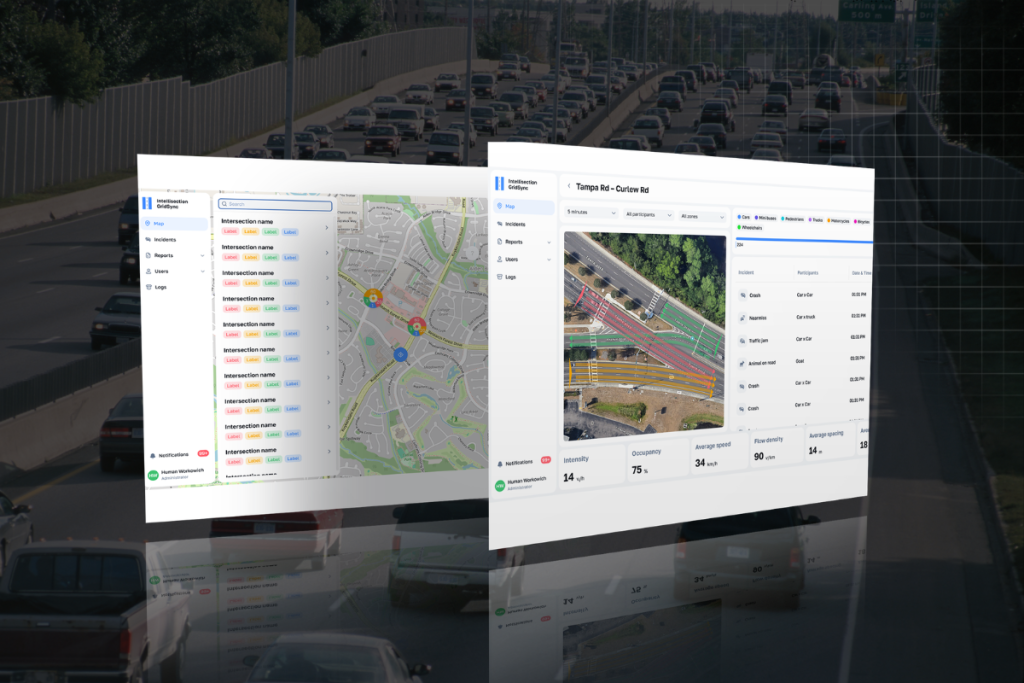
The introduction of IntelliSection, an advanced automated intersection monitoring solution by ISS, exemplifies this trend. This technology leverages AI video analytics among other advanced features to provide comprehensive traffic monitoring.
Moreover, with the Securos Crossroad Traffic Violation Detection Solution, automated violation detection has reached new heights. This system not only detects traffic violations but also provides actionable insights to improve traffic management.
Key Benefits of Automated Intersection Monitoring for Optimized Traffic Signal
This is the part that traffic engineers quietly love because it reduces guesswork.
Adaptive Signal Timing with Automated Intersection Monitoring
When you actually know demand by movement, you can tune signals in a way that fits reality. That might mean:
- Extending green when a queue is building
- Shortening wasted green for empty approaches
- Improving progression on corridors
- Adjusting left turn phases based on real turning volume
- Giving pedestrians more reliable crossing intervals in high foot traffic areas
Even small changes can reduce rear end crashes and risky runs on stale yellows, because drivers are not stuck in unpredictable delays.
Congestion and Queue Spillback Prevention Using Automated Intersection Monitoring Technologies
Queue spillback is one of those technical phrases that causes daily misery. It is when a backed up approach blocks upstream driveways or intersections, causing a cascade.
Automated intersection monitoring can detect growing queues and trigger:
- Signal retiming
- Dynamic message alerts (if integrated)
- Priority adjustments for transit routes
- Incident checks if the queue pattern looks abnormal
It is not magic. But it is faster than waiting for a call.
Automated Incident Detection at Intersections for Faster Emergency Response
A stalled vehicle in a turn lane. A minor crash in the box. A pedestrian fall. These things matter because minutes matter.
With automated monitoring, you can flag an incident quickly and notify operators. If integrated with emergency services workflows, it can reduce response time, which is basically the easiest way to reduce secondary crashes.
For instance, automated incident detection systems have shown promising results in enhancing emergency response times by quickly identifying incidents and notifying the relevant authorities. This technology has been highlighted in industry discussions such as those featured on Intellisection, where experts share insights and advancements in traffic management technologies.
Legally and Carefully: Red Light, Speed, and Crosswalk Compliance
Enforcement is the most sensitive part of this conversation, for obvious reasons. Some jurisdictions allow automated enforcement. Others restrict it heavily. Some require signage. Some require human review. Some prohibit it.
But in places where it is legal and done transparently, automated intersection monitoring can support:
- Red light enforcement with clear evidence packages
- Speed enforcement in high injury networks
- Crosswalk enforcement near schools and senior zones
- Block the box enforcement in dense downtown grids
Still, the goal should not be “more tickets.” The goal is fewer violations.
A good program often includes:
- Public notice and clear signage
- Equity impact review
- Warning periods before citations
- Published performance metrics like crash reduction
- Appeals processes that are actually usable
If your city is not doing those things, people will not trust the system. And without trust, the program gets torn out later. That happens more than vendors admit.
Automated Intersection Monitoring and Vision Zero Safety Programs: Preventing Crashes Before They Happen
Vision Zero programs aim to reduce fatalities and serious injuries, not just overall crash counts. Automated intersection monitoring fits that approach because it can surface high risk behavior before it becomes a fatal statistic.
This is the big difference between old school traffic safety and modern approaches:
- Old school: count crashes, wait for enough of them, then justify change
- Modern: analyze conflicts and near misses, then intervene early
Automated monitoring helps identify:
- Dangerous left turn conflicts
- Speeding patterns at certain times (like late night speeding)
- Crosswalk non compliance near schools
- Right turn on red issues where pedestrians are present
- Signal timing problems that encourage late entries
So instead of waiting for tragedy, you can redesign timing, add leading pedestrian intervals, restrict turn movements at peak, or physically redesign the intersection.
And yes, sometimes you still need concrete. But data helps you spend concrete money in the right places.
Automated Intersection Monitoring Implementation Plan: How to Roll It Out Without Wasting Money
Cities often get stuck because they try to boil the ocean. Or they buy a platform without defining what success looks like.
A cleaner implementation approach:
1) Start with High Injury Network Intersections Using Automated Intersection Monitoring
Pick 5 to 20 intersections with known risk. Near schools, transit hubs, complex multi leg intersections, high speed arterials. Do a pilot that targets safety outcomes, not just “cool dashboard”.
2) Define Automated Intersection Monitoring Success Metrics Before Procurement
Examples:
- Reduce red light entries by X percent
- Reduce severe crashes by X percent over Y months
- Cut incident detection time from Z minutes to Z minus something
- Improve pedestrian delay at specific crossings
- Reduce queue spillback occurrences
Then procure around those goals. Not the other way around.
3) Integrate Automated Intersection Monitoring with Existing Traffic Systems
If your monitoring system cannot export data into your traffic management center tools, GIS, or signal controller environment, you end up with another silo. Make integration a requirement. APIs, standard data formats, the boring stuff.
4) Plan for Maintenance and Calibration in Automated Intersection Monitoring
Cameras get dirty. Poles get bumped. Construction changes lane lines. Snow piles show up. AI models can drift.
Budget for ongoing operations, not just installation. Otherwise you will have “smart” intersections that quietly go dumb after six months.
Automated Intersection Monitoring Future Trends: V2X, Connected Vehicles, and Real Time Safety Alerts
Automated intersection monitoring is also a stepping stone. Once you can detect what is happening, the next step is communicating it.
Future leaning systems are moving toward:
- V2X integration for signal phase and timing messages
- Real time hazard alerts to connected vehicles
- Transit signal priority that uses live occupancy and delay data
- Pedestrian detection that triggers safer phasing automatically
- Citywide safety analytics that prioritize redesign projects with evidence
This is where traffic management starts acting more like modern operations tech. Observe, decide, act, measure. Repeat.
Automated Intersection Monitoring Conclusion: Traffic Safety and Intersection Management Through Smart City Technologies
Automated intersection monitoring is not just another gadget on a pole. It is a shift in how cities see intersections. From blind spots to measurable systems. From reacting after crashes to preventing the conditions that cause them.
Done right, it reduces serious injuries, cuts delays, improves emergency response, and gives engineers real data instead of hunches. This includes implementing advanced pedestrian safety solutions which can significantly enhance safety for vulnerable road users. Done poorly, it becomes a privacy fight or a neglected dashboard nobody checks.
So the breakthrough is not only the technology. It is the discipline around it. Clear goals. Transparent policies. Real safety metrics. And a willingness to adjust signals and street design based on what the intersection is literally telling you every day.
FAQ: Automated Intersection Monitoring: AI Traffic Safety Breakthrough
What is automated intersection monitoring and how does it improve traffic safety?
Automated intersection monitoring uses a combination of cameras, radar, sensors, and AI video analytics to observe real-time activity at intersections. It enhances traffic safety by enabling safer signal timing, faster incident detection, better enforcement where legal, and providing accurate data for engineers to reduce guesswork.
Why are intersections considered critical points for urban traffic accidents?
Intersections are hotspots for serious urban crashes due to the complexity of crossing movements, turning conflicts, pedestrian and cyclist presence, buses pulling in, delivery vehicles stopping unpredictably, and distracted drivers trying to beat yellow lights. Traditional traffic management often fails to adapt effectively in these scenarios.
What technologies are commonly integrated into automated intersection monitoring systems?
Modern systems typically combine AI video analytics with cameras, radar for speed and presence detection even in bad weather, lidar for precise object classification (depending on cost), edge computing for low-latency processing near intersections, and cloud platforms for long-term analysis and system health monitoring.
How does AI video analytics contribute to automated intersection monitoring?
AI video analytics processes camera feeds into structured data such as vehicle counts by lane, speed and trajectory estimations, detection of red light violations or stop line encroachments, pedestrian presence and compliance, and near-miss indicators like hard braking or sudden swerves. This proactive detection helps address issues before they escalate.
In what ways does automated intersection monitoring optimize traffic signal timing?
By accurately measuring demand per movement, the system can adapt signal timings—extending green phases when queues build up, shortening green times on empty approaches, improving corridor progression, adjusting left turn phases based on actual volume, and providing pedestrians with reliable crossing intervals—thus reducing crashes related to unpredictable delays.
How does automated intersection monitoring assist in congestion management and emergency response?
The technology detects queue spillbacks that block upstream intersections or driveways and triggers timely interventions like signal retiming or dynamic alerts. It also enables rapid incident detection (e.g., stalled vehicles or minor crashes) at intersections, allowing quicker operator notification and emergency response integration to reduce secondary crashes effectively.