
Walk into a modern store and it feels the same as it always has. Shelves. End caps. The little impulse rack that somehow gets you every time.
But behind the scenes, retail loss prevention is not the same game anymore. Not even close.
Shrink is still shrink, sure. Products disappear, receipts get “adjusted”, refunds get… creative. Employee theft still happens. Organized retail crime is still a thing and in some areas it is basically a business model.
What changed is the way smart stores respond.
The best retailers are quietly rebuilding loss prevention with better data, better tools, and honestly a better attitude. Less “catch the bad guy at the door” and more “stop the leak before it becomes a flood”.
This is what loss prevention reinvented looks like.
Smart Store Shrink: Why Traditional Loss Prevention Is Failing
Old school loss prevention was built around a few ideas.
Put cameras up. Hire a guard. Train staff to watch for suspicious behavior. Do random bag checks. Lock up the expensive stuff.
That still works sometimes, but it is also a little blunt. And it misses the reality of today:
- Stores have fewer employees on the floor.
- Self checkout theft is easier and harder to spot.
- ORC crews move fast and know the policies better than the cashier.
- Returns fraud is way more common than most people realize.
- The “loss” is not always a stolen item. It can be a bad scan, a promo mistake, a pricing error, a vendor short, a mispick. Death by a thousand tiny cuts.
So if your loss prevention strategy is mostly “watch the exits”, you will keep losing revenue in places you are not even looking.
Smart stores treat shrink like a systems problem. Not just a people problem.
This shift in perspective also entails addressing issues such as workplace violence, which can be mitigated through methods like AI’s role in workplace violence prevention. By leveraging advanced technology and data analytics, retailers can create safer environments for both employees and customers while simultaneously refining their loss prevention strategies.
Retail Security Technology: The Shift From Cameras To Intelligence
Yes, cameras are still everywhere. But the interesting part is not the camera. It is what the store does with the footage.
Traditional CCTV is passive. It records. Maybe someone reviews it later if something big happens. By then, the product is gone and the person is long gone too.
Modern retail security tech is more active. It can flag patterns, connect events, and help teams respond faster.
Not in a sci fi way. More like this:
- A spike in “item not found” scans at one register
- A weird pattern of returns without receipts tied to the same ID or phone number
- A high value SKU repeatedly disappearing from one aisle after certain shifts
- A specific self checkout lane where interventions happen constantly
The point is visibility. Shrink loves the dark. Intelligence turns the lights on.
AI Loss Prevention: How Computer Vision Changes The Floor Game
Let’s talk about the thing everyone brings up. AI.
It is easy to roll your eyes because the word gets abused. But in loss prevention, AI based video analytics and computer vision can actually do practical work.
Here is what computer vision can help with in a smart store:
1. Self checkout risk detection
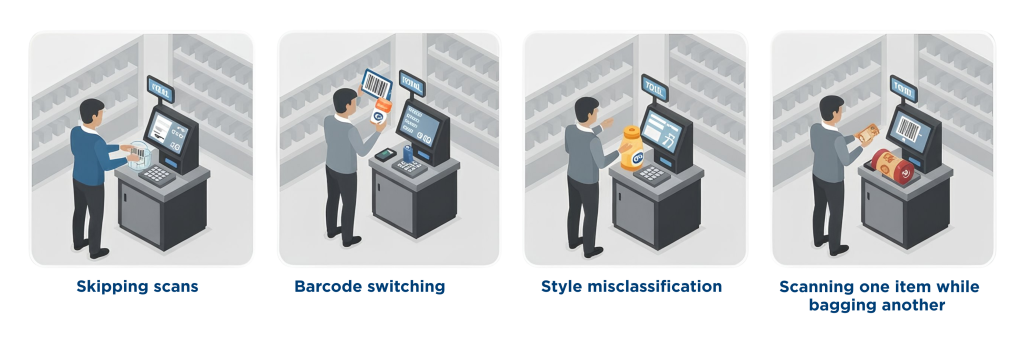
Some systems can detect common loss behaviors like:
- skipping scans
- barcode switching
- “banana trick” style misclassification (cheap item instead of expensive one)
- scanning one item while bagging another
This does not mean auto accusing customers. The best setups use gentle friction. A prompt. A staff assist. A “please rescan that item” moment. Small interventions, less confrontation.
2. Suspicious concealment patterns
Again, not “this person looks suspicious”. That is a mess ethically and operationally. The better models focus on actions, not appearances. Hand to pocket movements repeated in high risk zones, lingering in restricted areas, that kind of thing.
3. Real time alerts for staff safety
Loss prevention is also safety. When a situation escalates, alerts and workflows matter. Faster awareness can prevent injury, not just shrink.
And yes, AI is not perfect. It needs good calibration, clear policies, and people who know when to ignore it. But when it is used right, it reduces the “we only find out after inventory” problem.
RFID Inventory Accuracy: Stopping Shrink By Knowing What You Have
Sometimes the most expensive shrink is the one you do not even count as shrink. It just looks like “inventory accuracy issues”.
RFID has been around for a while, but adoption is growing because the math is getting hard to ignore. If you can scan thousands of items quickly and accurately, you can:
- detect missing items sooner
- reduce phantom inventory (system says you have it, shelf is empty)
- improve replenishment so shelves are not empty for days
- spot odd movement patterns, especially in apparel and high shrink categories
RFID is not only a loss prevention tool. It is an operations tool that happens to reduce loss.
And that is a theme you will see again and again. The best shrink reduction strategies feel like operational excellence.
POS Exception Reporting: Catching The Quiet Fraud No One Talks About
Not all theft looks like someone stuffing a jacket.
A lot of revenue leakage happens at the register. Or, more accurately, in the data coming out of the register.
POS exception reporting is basically the store’s internal lie detector. It looks for transactions that are statistically weird or policy weird. Stuff like:
- too many voids per cashier
- excessive refunds
- “no sale” drawer opens
- discounts without manager approvals
- price overrides that cluster around certain times
- high return rates tied to the same customer profile
This is where smart stores get sharp. Because you can have a store with “normal” foot traffic and still bleed margin through little behaviors that never trigger a camera review.
Also, exception reporting is not only about catching bad actors. Sometimes it reveals training problems. Or broken processes. Or incentives that push people into shortcuts.
Fixing the system often cuts loss more than punishing individuals.
Organized Retail Crime (ORC) Analytics: Fighting Networks, Not Individuals
ORC is not a random teenager stealing a lipstick. It is coordinated. It is repeatable. It has logistics.
Smart retailers are building ORC response like an intelligence operation. A bit dramatic, but it is true.
They combine:
- incident reports across stores
- SKU level theft patterns
- return and refund data
- booster activity indicators
- law enforcement coordination
- even marketplace monitoring in some cases
The goal is to connect dots. A single store might see one event and shrug. But across 50 stores, the pattern can be obvious.
And when you can identify the pattern, you can do targeted prevention:
- adjust merchandising for the specific SKUs being targeted
- change staffing during the high risk windows
- modify return policies for specific products
- support prosecution with better documentation
ORC thrives on retailers treating each incident as isolated. Analytics makes it harder for them to hide in plain sight.
Self Checkout Theft Prevention: Friction That Does Not Kill The Customer Experience
Self checkout is convenient. It also creates opportunity.
And here is the hard truth. You cannot simply “train customers to be honest” with a poster on the wall. You need design.
Smart stores reduce self checkout shrink with a mix of:
- better lane layout so attendants can actually see and help
- scale and weight verification (used carefully, because false positives annoy everyone)
- camera assisted item verification
- targeted interventions only when risk is high
- clearer UX so honest mistakes drop (a surprising amount of loss is just confusion)
This is where loss prevention and customer experience collide. If you make self checkout feel like airport security, customers will hate it. If you make it too loose, shrink climbs.
The sweet spot is small, calm friction at the right time.
Not constant suspicion.
Employee Theft Mitigation: Building Controls Without Poisoning Culture
Employee theft is real. But the best stores do not handle it with paranoia. They handle it with controls.
Because most employees are not stealing. And if you treat everyone like they are, you will lose good people. Which creates understaffing. Which increases shrink. The cycle is ugly.
Smart stores focus on:
- strong separation of duties (who can refund, who can approve, who can reconcile)
- role based permissions in POS systems
- audit trails that are easy to review
- tighter cash handling workflows
- smarter scheduling and oversight in high risk zones
- training that makes policies simple and consistent
Also, they create reporting channels that feel safe. A lot of internal loss is known by coworkers long before management finds out. People just do not want drama.
The goal is not “catch employees”. It is “make theft hard, make honesty easy”.
Data Driven Loss Prevention Strategy: One View Of The Truth
Here is where everything starts to connect.
A smart store does not treat loss prevention as a separate department that swoops in after the fact. They build a data driven strategy that blends:
- video insights
- POS data
- inventory movement
- receiving and vendor compliance
- returns behavior
- staffing and traffic patterns
When those systems talk, you get something powerful: context.
Example. A high shrink SKU goes missing constantly. Is it theft? Maybe. But with data you can test:
- Was it actually received?
- Did it get scanned into inventory correctly?
- Is it being mispicked for online orders?
- Are price changes causing weird demand spikes?
- Is it concentrated around certain shifts?
Smart stores protect revenue by reducing guesswork.
And when you reduce guesswork, you spend your time and budget in the places that actually matter.
Retail Loss Prevention Best Practices: What “Smart” Looks Like In Real Life
This is the part people want. The checklist. The playbook.
So here are practical best practices smart stores tend to share, even if their tech stacks differ:
- Start with measurement. If you cannot measure shrink drivers, you will chase ghosts.
- Prioritize high impact categories. Not everything needs Fort Knox protection. Start where loss is concentrated.
- Use layered defenses. A mix of design, tech, process, and people is essential. No single tool will save you.
- Reduce policy loopholes. Fraud loves inconsistent returns policies and unclear discount rules.
- Train for de-escalation. Protect staff. Avoid confrontation. Good LP is calm, not aggressive.
- Close the loop. When an alert happens, make sure someone owns the outcome. Otherwise it becomes noise.
- Keep the customer experience intact. The goal is protected revenue, not punished shoppers.
Most importantly, do not buy shiny tools before you fix basic processes. Tech amplifies what already exists. If your operations are messy, tech will just show you… a mess in HD.
The Future Of Loss Prevention In Retail: Quiet, Predictive, And Mostly Invisible
Loss prevention is heading toward something that looks less like “security” and more like “risk management”.
More predictive. More automated. More integrated into operations. Less dramatic.
The best version of it is almost invisible to good customers because it prevents problems upstream. It catches errors early. It blocks repeat fraud patterns. It adds friction only when needed.
And honestly, that is the point.
Shrink is a tax on retail. Smart stores are finally treating it like one—with systems, not just suspicion.
For more insights on effective loss prevention strategies in retail and how retail can benefit from them, it’s crucial to understand these best practices and future trends in loss prevention management.
Let’s Wrap This Up
Loss prevention reinvented is not about turning stores into surveillance boxes. It is about protecting revenue with better signals, tighter processes, and tools that help humans make faster decisions.
AI can help, but it is not magic. RFID can help, but it is not a silver bullet. POS analytics can help, but only if someone actually reviews the exceptions and follows through.
Smart stores win by stacking small advantages. A little more visibility. A little less ambiguity. A few fewer loopholes.
And over a year, that adds up to real money staying where it belongs. In the business. Not walking out the door.
FAQ: Loss Prevention Reinvented: How Smart Stores Protect Revenue
What are the limitations of traditional loss prevention methods in modern retail?
Traditional loss prevention methods like cameras, guards, and bag checks are often blunt and miss many modern challenges. These include fewer employees on the floor, easier self-checkout theft, organized retail crime (ORC) crews exploiting policies, returns fraud, and losses caused by operational errors such as bad scans or pricing mistakes. Such approaches mainly focus on watching exits but fail to address shrink as a systemic issue.
How do smart stores reinvent loss prevention to effectively reduce shrink?
Smart stores treat shrink as a systems problem rather than just a people problem. They leverage better data analytics, advanced tools like AI and RFID, and adopt proactive attitudes focused on preventing loss before it escalates. This includes detecting suspicious patterns in real-time, improving inventory accuracy, and integrating safety measures to protect employees and customers.
In what ways does AI-based computer vision enhance retail loss prevention?
AI-powered computer vision helps detect specific loss behaviors such as self-checkout fraud (skipping scans, barcode switching), suspicious concealment actions (repeated hand-to-pocket movements), and provides real-time alerts for staff safety during escalating situations. It supports gentle interventions like prompts for rescanning items to reduce confrontation while increasing detection accuracy beyond human observation.
What role does RFID technology play in improving inventory accuracy and reducing shrink?
RFID enables rapid and accurate scanning of thousands of items, allowing retailers to detect missing products sooner, reduce phantom inventory discrepancies, improve shelf replenishment timing, and identify unusual movement patterns especially in high-shrink categories like apparel. By enhancing operational excellence through precise inventory management, RFID indirectly but effectively reduces shrink.
How can POS exception reporting help identify quiet fraud at the register?
POS exception reporting analyzes transaction data to flag statistically unusual or policy-violating activities such as excessive voids by a cashier, frequent refunds without receipts, or suspicious ‘no sale’ transactions. Acting like an internal lie detector, it helps uncover revenue leakage that doesn’t involve visible theft but occurs through manipulated sales data or creative refund practices.
Why is addressing workplace violence important in modern retail loss prevention strategies?
Workplace violence directly impacts employee safety and store operations. Incorporating AI-driven workplace violence prevention methods enhances real-time awareness and response capabilities. This not only protects staff and customers but also supports overall loss prevention by creating safer environments where theft and disruptive incidents are less likely to occur or escalate.