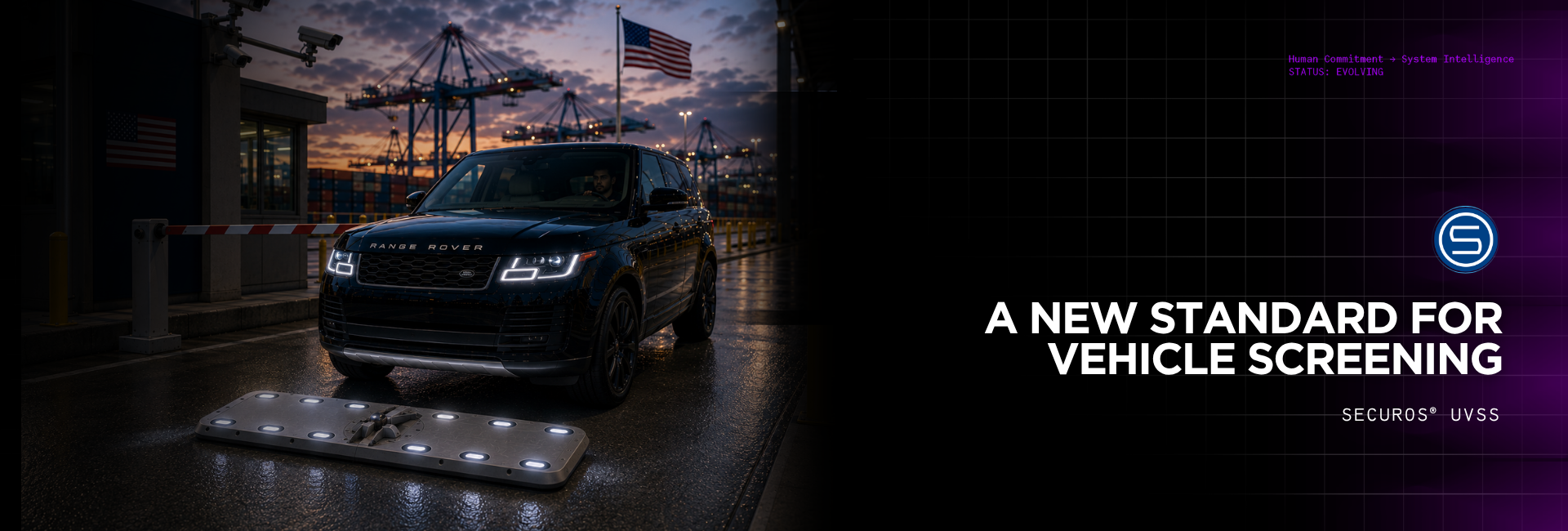

Recent incidents at RAF facilities highlight key vulnerabilities, need for enhanced threat detection measures
Late last month, British authorities took six people into custody in connection with what investigators believe was a planned terror attack at RAF Fairford, an airbase about 100 miles outside of London that has been used by American aircraft for decades, including most recently during the war in Iran. While the investigation into the suspected plot continues, the U.S. Air Force has already ordered its bomber fleet at the base to return to U.S. soil as military officials step up security at installations around the globe.
Though base security was never breached in this instance, it’s the second time in just over a year that security measures have been in the spotlight at UK airfields. In June of 2025, a pair of activists broke into RAF Brize Norton and subsequently vandalized the engines of several aircraft with spray paint, triggering an immediate security review that resulted in the deployment of new technology at the base.
While authorities have not revealed the full details of the suspected plan at RAF Fairford, incidents like these are a reminder that perimeter security measures cannot be taken for granted. They also raise a larger question for military bases, airports, and other sensitive facilities: are all points of entry being monitored with the same level of rigor?
Vehicle Checkpoints: An Overlooked Vulnerability
On the surface, planning to carry out a coordinated attack against a military installation that is equipped with some of the most sophisticated security technologies on the planet would seem like a fool’s errand. After all, the military and other high-security facilities can leverage everything from sensors that can detect the slightest touch on an exterior fence or the footsteps of an approaching intruder to the most advanced visible and thermal imaging cameras money can buy. However, for all of the Mission Impossible-type safeguards a facility may have, the fact is one of the biggest failure points remains human error, which can be exploited right at the entrance.
Vehicle entry points represent one of the first lines of defense for any facility, but for all of the technological advancement that has taken place in recent years, many organizations still rely on outdated methodologies that heavily depend on the judgement calls of guards to determine whether a vehicle or its occupants pose a threat. For example, one of the tried-and-true methods for undercarriage inspection remains pole-mounted mirrors and flashlights, which not only rely on human judgement to detect potential threats, but also keeps guards themselves in harm’s way. Canines are also often utilized to sniff out explosives and other threats, but they also require dedicated handlers and continuous training that is costly and doesn’t provide foolproof results.
How Under-Vehicle Surveillance Solutions Help
However, advancements in imaging and AI-powered analytics have spurred the development of under-vehicle surveillance solutions or UVSS, for short, that are capable of providing full undercarriage scans that can automatically alert operators to the presence of potential explosives, weapons, and other types of contraband. These systems typically rely on high-resolution cameras positioned at ground level, producing a complete image of a vehicle’s undercarriage as it passes through the scanning zone. Unlike a handheld mirror or flashlight, this image is consistent in quality and coverage every time, regardless of vehicle speed, lighting conditions, or the attentiveness of the guard conducting the inspection.
Many modern UVSS platforms also incorporate AI-powered anomaly detection, comparing each scan against a reference image of the same vehicle (or a baseline undercarriage profile) to flag discrepancies automatically. Rather than asking a guard to recall what a “normal” undercarriage looks like across hundreds of vehicle types, the system highlights foreign objects, irregular attachments, or signs of tampering for human review. When a scan indicates a potential threat, such as an unexplained object or structural inconsistency, the system can generate an automated alert, prompting a secondary inspection before the vehicle is granted access.
Measuring the Value: Consistency, Throughput, and Accountability
The case for UVSS platforms at vehicle checkpoints doesn’t rest on any single feature. It’s the combination of capabilities that makes the technology relevant to modern perimeter security planning. Among these include:
Inspection consistency
Every vehicle receives the same standard of scrutiny, removing the variability introduced by fatigue, time pressure, or differing levels of training among personnel.Reduced human dependency
Automated detection reduces reliance on an individual’s ability to spot subtle anomalies in a matter of seconds, particularly during high-traffic periods or adverse weather.Improved throughput
Because scans are captured automatically as vehicles pass through the checkpoint, screening can occur without the delays associated with manual inspection, helping maintain traffic flow without compromising scrutiny.Auditability
Digital recordkeeping means every scan can be stored, retrieved, and reviewed later, giving security teams and investigators a verifiable record of what passed through a checkpoint and when.Integration potential
UVSS data can feed into broader checkpoint and perimeter security ecosystems, including license plate recognition, access control, and video management systems, supporting a more unified picture of site activity.
None of these capabilities replace trained personnel, however, they give those personnel better information and more consistent support, allowing human judgment to focus where it matters most.
Reassessing the Vehicle Gate
The RAF Fairford and Brize Norton incidents are a reminder that perimeter security is only as strong as its least scrutinized entry point. Fencing, surveillance cameras, and access control systems at pedestrian gates often receive significant investment and attention, yet the vehicle checkpoint can remain reliant on methods that haven’t meaningfully changed in decades.
Security leaders should ask themselves a direct question: does our vehicle screening process meet the same standard as the rest of our perimeter security program? For many sites, closing that gap means reconsidering how vehicle undercarriages are inspected, not as an isolated upgrade, but as a core component of a layered, modern security strategy.
Strengthen Your Vehicle Checkpoint
The SecurOS® UVSS from ISS is designed to help security teams improve inspection consistency, reduce manual workload, and maintain detailed digital records at every vehicle checkpoint. To see how it can support your perimeter security strategy, request a demo or download the datasheet to learn more about system specifications and deployment options.